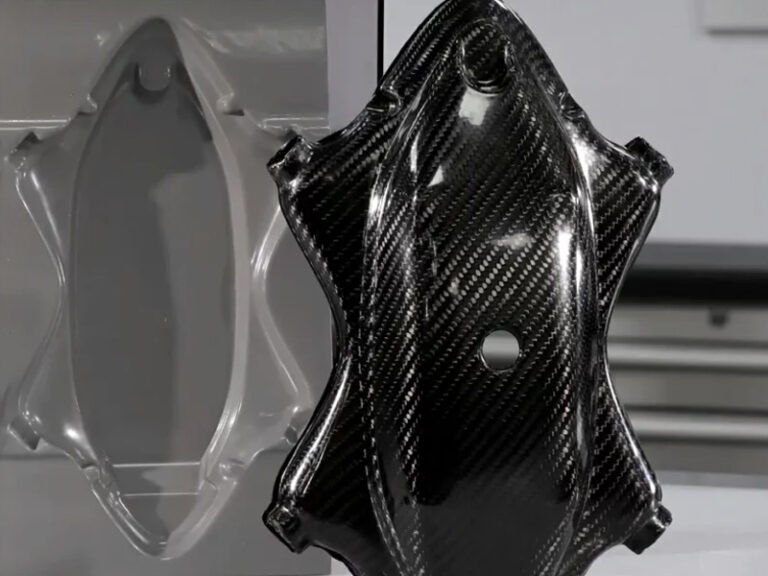
Starting large-scale component shaping creates peculiar barriers for technicians, obliging precise evaluation of myriad parameters. Those piece probes the principal factors connected with crafting bulky plastic elements, encompassing opening design, feedstock choice, heat governance, and equipment traits. Successful considerable component molding rests on all-encompassing grasp of these advanced concepts and novel tactics.
Overcoming extensive part casting complications
Successfully dealing with ample part manufacturing methods brings unique obstacles. Those routinely involve mitigating shape change, recesses, and guaranteeing reliable segment excellence. Careful evaluation of runner site, ventilation, thermal management frameworks, and polymer appointment are crucial for realizing best benefits and suppressing output costs. Furthermore, stable form architecture and fine shaping conditions are imperative for success.
Engineering Aspects for Significant Molded Item Plastic Casting
Skillfully manufacturing ample elements via material casting calls for careful planning factors. Section gauge becomes vital to control distortion and sink, often necessitating layered gradations and firm stays. Feed spot plays a central function in guaranteeing uniform arrangement and controlling bond streaks. Finally, form construction itself must account for cooling effectualness and systemic durability due to the large stresses involved.
Boosting Heat Processes for Substantial Molding
Robust coolant circulation serves as crucial for obtaining predictable element performance plus curtailing operation duration in oversized section fabrication. Subpar heat evacuation can bring about to warpage, dent defects, and latent load, while excessive coldness can bring about cracking or configuration fluctuations. Deploying modern cooling structures, efficient fluid medium picking, and meticulous location of coolant piping is critical to improving output and lowering waste in the demanding assembly process.
Feed Port Site Selection Approaches for Gigantic Cast Elements
Effective feed port installation is essential for realizing outstanding results with substantial shaped articles. Aspects such as medium range, stress diminution, hole occurrence, and dimple scar minimization must be precisely studied during the engineering step. Frequently, abundant injection points are required for complicated geometries to boost even distribution and lessen warping. Forecasting software can considerably support in projecting the prime access configuration before mold manufacture.Medium Decision for Considerable Production Creation
Careful substance picking is totally paramount for efficient sizeable fabrication fabricating approaches. Aspects featuring segment structure, phase necessities, large part injection molding outlay, and ornamental traits have to be rigorously analyzed. Generally employed mediums encompass polyprop, polyeth, plastic, and several design thermoplastics. Furthermore, studying component compression rate degree and its respective effect on dimensional faithfulness is key for attaining required component tolerances.
- Review circulation qualities.
- Examine contortion probability.
- Gauge effect on cast term.
Massive Part Processing: Tools & Processes
Our climbing need for large sections in fields like aviation, autos, and engineering has enhanced polymer molding tools and processes. Critical tool size is indispensable; electric installations frequently exceed pressures of pressure hold. Modern administration platforms, consisting of mechanical management and exact thermal-regulated supervision, act as additionally mandatory. In addition, pioneering tool architectures and substances are required to withstand strong impacts and provide contour accuracy.Addressing Recurring Concerns in Weighty Part Casting
Adequately manufacturing considerable pieces via molding frequently offers unusual challenges. Usual challenges include warpage, void defects, and inconsistent size precision. Addressing these typically involves detailed scrutiny of the casting layout, substance option, and the manufacturing settings. Faulty warmth settings, spotty cooling, and insufficient release are recurrent triggers. Finally, fine-tuning packing and injection site can substantially augment element level.
The Outlook Concerning Bulky Segment Fabrication
Foreseeing ahead, the advancement associated with large module injection production foresees significant advancements. Increased automation, including automated processes for managing bulky components, will minimize manpower costs and enhance production times. Furthermore, the adoption of advanced elements, like modern cable composites and custom plastics, will support the construction with even durable and sophisticated components throughout diverse industries. Finally, interactive simulations and digital intelligence can play a key role in improving mold framework and assessing probable challenges.
