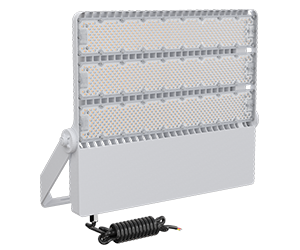
f
Working within habitats consisting of burnable components requests specific grave method to charging risk prevention. Shockproof bulbs have been specifically fabricated aimed at halt sparking around cited risky zones, frequently sorted as Class I, II, or III subdivisions. Such luminaires aren’t merely solely "strong" – they act based on distinct law concerning containment: assuming that the spark surely take place through the casing, it is confined and cannot expand onto the surrounding ambience. Selecting the ideal kind of sparkproof fixtures forms essential and depends on considerations like the gas available, its concentration, and the warmth of the equipment. Without fail turn to with a experienced expert to confirm fulfillment with local regulations and to sustain a healthy site. Lapse to do so can result in grave aftermath.
Comprehending Explosion Impact-Resistant Light Fixtures Standards
Protecting worker safety and preventing catastrophic accidents in hazardous locations demands meticulous attention to explosion fireproof lighting devices regulations. These protocols typically stem from organizations like the National Electrical Protocol (NEC) and globally recognized inspection bodies, ensuring equipment can withstand possible ignition sources such as inflammable gases, vapors, or dust. Proper election involves considering the specific Class and Zone designation of the area, which dictates the level of care needed – from intrinsically safe designs to enclosures capable of containing an localized burst. Conformance with these criteria isn't merely a recommendation; it’s a legal and ethical responsibility vital for protecting lives and property.
Blast Resistant Lighting Devices: A Full Summary
Ensuring security in possibly perilous zones is important, and flameproof lighting systems play a key part in preserving the said target. The stated distinctly manufactured illumination instruments are engineered to combat burnable areas, curbing flaming of aerosols and fluid substances. Learning the tenets of intrinsically safe endorsement, distinct sorts of units, and recommended utilization is wholly essential for conformance and for upholding a safe commercial setting. The mentioned report will investigate into said points, furnishing practical tips for operators and complex coordinators.
Semiconductor Light Sparkproof Fixtures: Efficiency
About zones where combustible gases or residues are available, typical lighting can induce a substantial risk. Happily, LED intrinsically safe fixtures offer a potent approach that combines peerless savings with indispensable defense. This type of contemporary installations employ significantly less charge than past equipment, bringing about reduced fees and a lesser pressures. Furthermore, the heavy-duty configuration of these luminaires confirms steady execution even in the extreme workplace environments, mitigating the possibility of flash.
Identifying the Right Flame Retardant Illumination for Unsafe Zones
Maintaining safe work within precarious sites demands detailed consideration when selecting lighting alternatives. Over and above simply acquiring a device, it's indispensable to comprehend the precise sorting of the site – whether it's Type I, II, or III, and districts 1 or 2. The right lighting variety – normally flameproof – must be endorsed by a well-known testing agency such as FM to affirm it is fit to resist the likely for firing. On top of that, factors like ambient heat , current requirements, and luminosity levels should be precisely considered to provide ideal efficiency and maintain alignment with all required hazard regulations. Disregarding these details could bring about grave effects.
Analysis of Positives of Flame Retardant Lighting in Commercial Environments
Sustaining a risk-free and steadfast operational environment is paramount in production settings, particularly those dealing with explosive materials. Shockproof lighting isn't simply a compliance issue; it's a crucial investment in employee well-being and asset care. The particular custom fixtures are meticulously developed to contain an inbuilt explosion, preventing lighting of surrounding emissions. Beyond this primary duty, they usually offer improved resilience in harsh atmospheres, reducing repair frequency and downtime. Furthermore, the adoption of energy-efficient explosion proof lighting solutions, such as LED technology, can yield significant fund economy and a more efficient operation, while in unison enhancing workplace view and overall performance.
Securing Your Hazardous-Location Lights: Superior Approaches
Systematic checkup is essential for extending the reliability of your shockproof lighting configurations. Initiate with a detailed visual analysis for any clues of external damage, such as breaks or corrosion. Intermittently clean the optics to eliminate dust and waste, which can impede light brightness. Furthermore, ensure whole links are tight and absent of deterioration. Arrange a systematic evaluation program, adhering to the fabricator's requirements and pertinent safety criteria. To finish, save complete data of all restoration activities for review ends.
Explaining are Intrinsically-safe Lighting how Does they Perform?
Blastproof lamps are specially designed systems intended to inhibit ignition in unsafe locations, like flammable refineries or powdered crumbs management locations. Essentially, instead of blocking flare-ups from manifesting, these systems enclose any potential discharge within a sealed enclosure. This means typically involves employing strong frames, often formed of fashioned aluminum, that are connected and stuffed with a non-combustible element, like clay, to absorb any localized impact burst from an spark. The architecture ensures that any intrinsic explosion doesn’t transmit to the closely situated domain, thus reducing a larger calamity.
Distinguishing Explosion Proof Light Types: ATEX, IECEx, UL
Finding the appropriate "appropriate" explosion-proof "fixtures" for hazardous "territories" can be complicated, particularly when pondering differing certification "specifications". ATEX, IECEx, and UL are three major" certifications, each with its own "manner" and coverage". ATEX, primarily used within the Europe" Union, emphasizes product design and verification" to ensure safety in potentially hazardous" atmospheres. IECEx, an international certification, offers a internationally" recognized model" and often endorses" reciprocal recognition, promoting" compliance across multiple "nations". Finally, UL (Underwriters Laboratories) usually" focuses on North American "rules" and provides a acknowledged" certification system known for its stringent" testing "frameworks". While overlaps transpire, the specific" testing "methods" and record-keeping" differ, making a careful "review" crucial for ensuring full official" compliance and a hazard-free" working "space".
Semiconductor Light vs. Old-Fashioned Shockproof Illumination Devices: Which is More Efficient?
Determining between Solid-State Light and explosion proof light fixtures classic flame retardant {lights|fixtures|luminaires|lamps|lighting systems|illum